
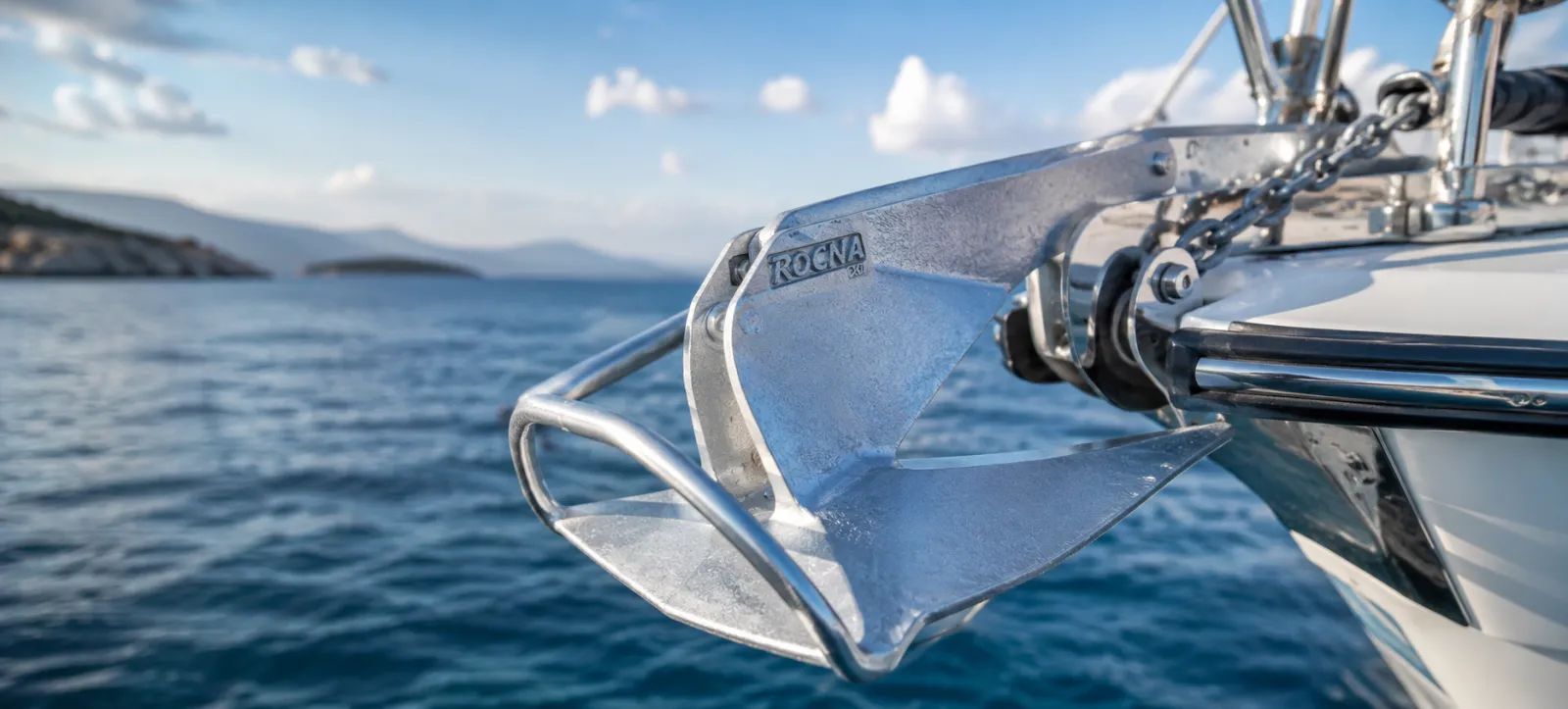
Start with how you actually anchor
Before you look at a single anchor, be honest about how you cruise. Do you drop the hook for a lunch stop in settled weather, or do you spend nights on the hook in bays where the wind clocks around at 3am? The overnight, all-weather cruiser needs a very different anchor from the day-tripper who is never more than a short motor from a marina.
The good news: the anchor that keeps you safe in a blow will also do just fine for lunch. So when in doubt, choose for the worst night you expect, not the average one.
New-generation anchors vs the old classics
Anchor design took a big step forward in the last twenty years. The so-called new-generation anchors consistently out-perform the older designs in independent tests, usually giving equivalent holding power at 10 to 20 pounds lighter. Here is the short version.
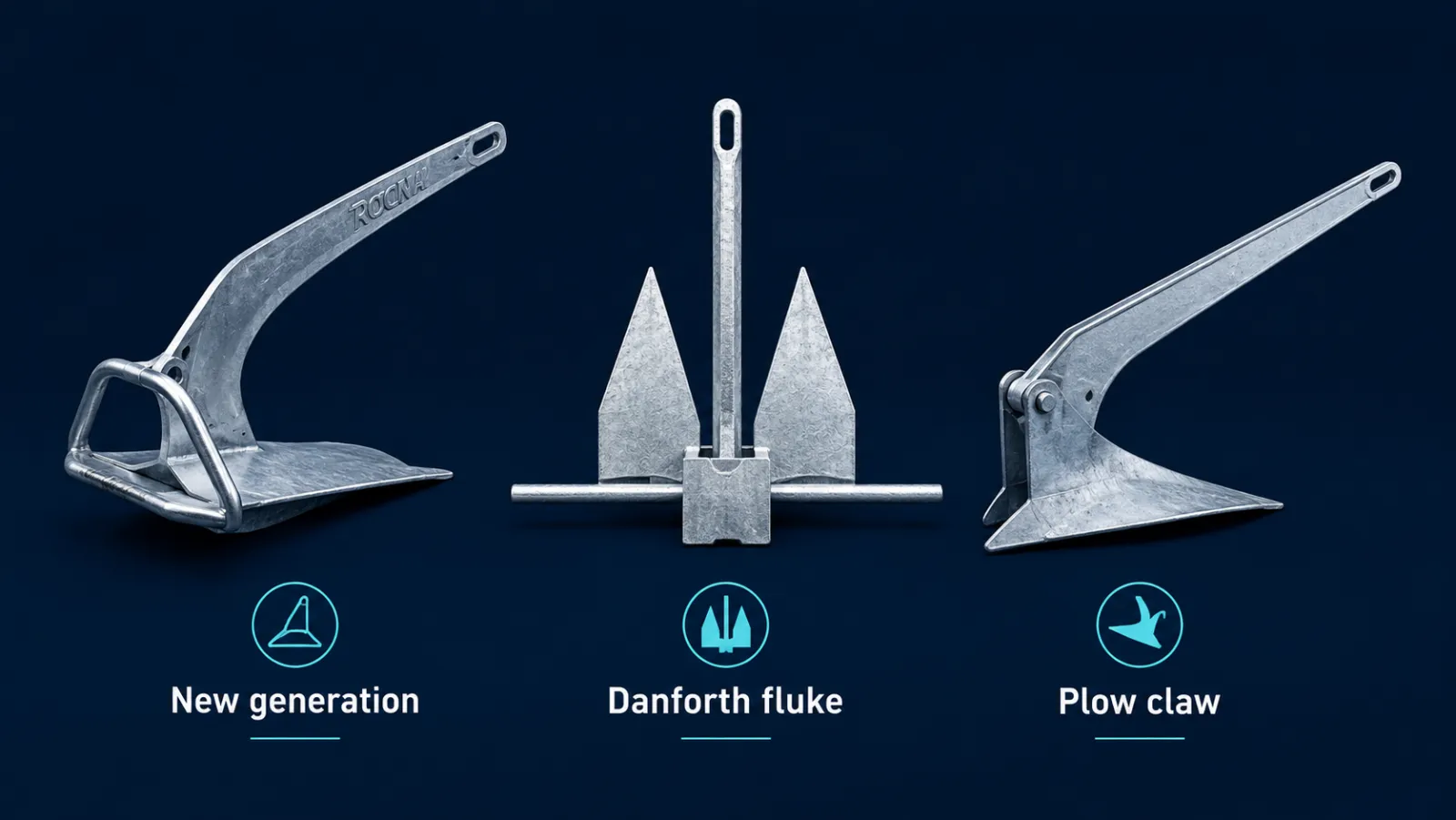
New-generation scoop anchors (Rocna, Spade, Mantus, Ultra)
These use a concave, spade-like fluke with a sharp, weighted tip that digs in fast and buries deep. The Rocna and Mantus add a roll bar so the anchor rights itself on the bottom; the Spade and Ultra use a ballasted tip to do the same job. They set quickly, hold hard, and reset well when the wind shifts. For most cruising boats, this is the anchor to beat. If you are buying one anchor and want it to just work, start here.
Danforth and Fortress (fluke anchors)
Fluke anchors have a huge surface area for their weight, so in soft sand and mud they hold extremely well, arguably better than anything else. They stow flat, which makes them a great second anchor or kedge. The catch: outside of sand and mud they struggle, and they do not reset reliably when the pull direction changes, so they are a poor choice as your only anchor in a swinging anchorage.
CQR, Delta and Bruce (plow and claw)
These were the standard for decades and you will still see them on plenty of bows. A Delta plow is simple and sets reasonably well. The hinged CQR and the Bruce claw are more forgiving of tidal shifts but have a modest holding-power-to-weight ratio by modern standards, and the CQR in particular can be slow or stubborn to set. They work, but you will carry more weight for the same security.
Sizing: bigger is better
Every anchor maker publishes a sizing chart based on boat length and displacement. Treat that chart as the minimum, not the recommendation. The single cheapest upgrade to your anchoring is to go one size up from what the chart suggests. A heavier anchor sets faster, buries deeper, and holds through the gusts that drag an undersized one.
The weight penalty on the bow is real but small compared to the peace of mind. Very few sailors have ever regretted a bigger anchor at 3am; plenty have regretted a smaller one.
Match the anchor to the seabed
No single anchor is best everywhere. Think about where you spend most of your nights:
- Sand: almost everything holds well. New-generation and fluke anchors excel.
- Mud: a fluke anchor (Danforth or Fortress) or a big new-generation scoop. You need surface area and deep penetration.
- Weed and grass: a sharp, heavily weighted tip cuts through where blunt anchors just skate. New-generation anchors win here, and you often need to let it sit and dig in.
- Rock and coral: nothing sets reliably. Many crews carry a grapnel or a heavy plow, use extra chain, and dive the anchor to check it.
This is why experienced cruisers carry two different anchors: a new-generation main for 90 percent of nights, and a fluke or grapnel for the seabeds where the main struggles.
The anchor is only half the system
Here is the part the anchor ads never mention. A brilliant anchor on a short, light rode will drag; a modest anchor on plenty of chain at good scope will often hold fine. Ground tackle is a system, and every part matters:
- Chain and rode: chain adds weight low down, keeps the pull on the anchor horizontal, and resists chafe. All-chain or a chain-and-nylon combination both work; what matters is having enough.
- Scope: pay out 5:1 to 7:1 of rode to the depth (measured from the bow roller, including tide). Too little scope lifts the shank and pulls the anchor out.
- Setting technique: lower, do not throw. Let the boat drift back, then power set gently in reverse until the anchor bites and the boat stops.
- The anchor watch: once you are set, you need to know if you start to move, especially while you sleep.
We wrote a whole guide on that last piece. See our anchoring tips for a better hold for scope, setting and swing in more detail.
Know the moment you start to drag
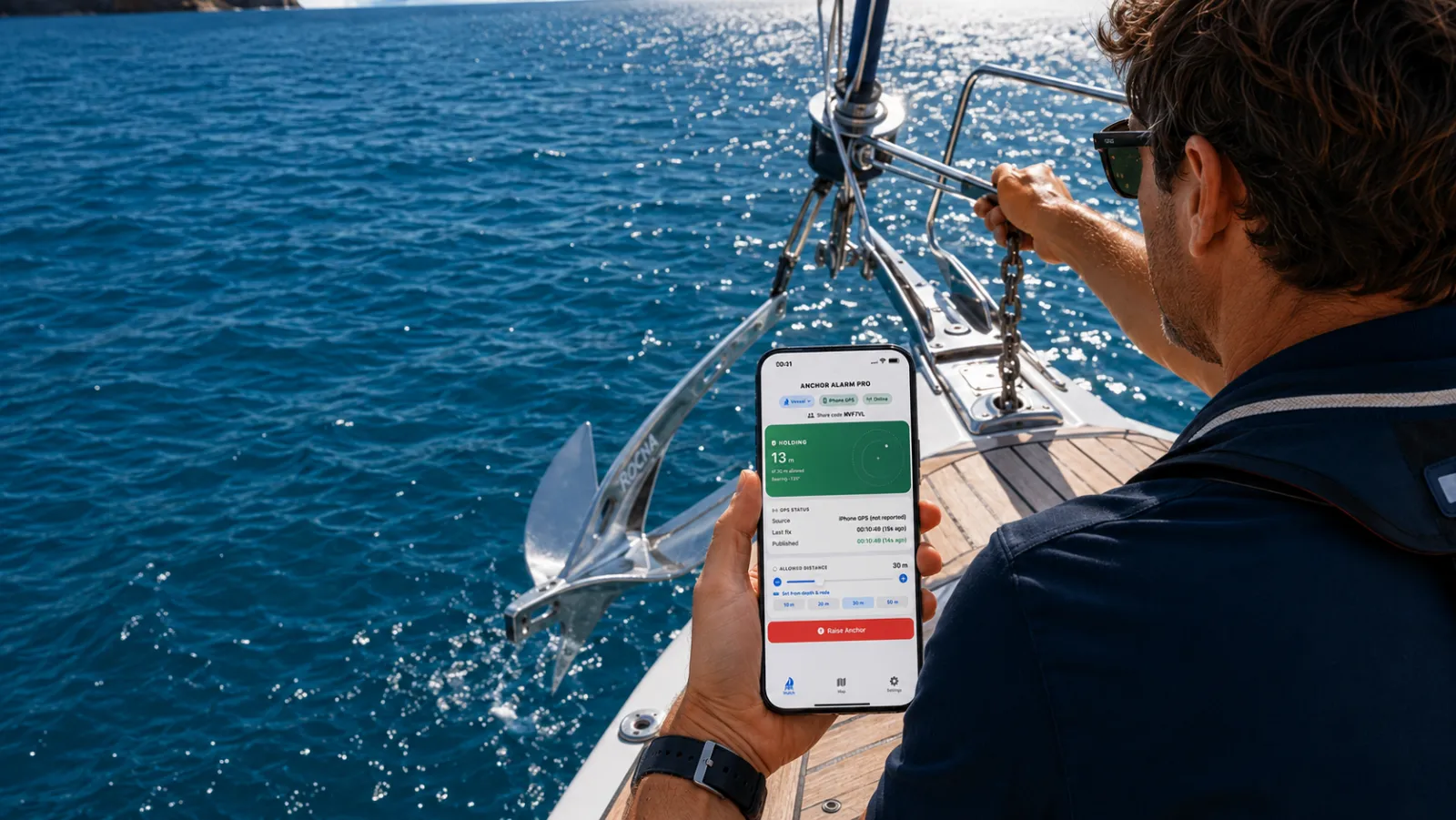
Even the best anchor can break out in a wind shift or a bad patch of weed. Anchor Alarm Pro watches your position with the GPS you already have and sounds a loud alarm the instant your boat leaves the safe circle, so a dragging anchor wakes you before it becomes a problem. Free to use, no account.
So, which anchor should you buy?
If you want a single answer: buy a new-generation scoop anchor, one size up from the chart, on plenty of chain. Add a fluke anchor as a second for soft-mud nights and as a backup. Then anchor with good scope, set it properly, and keep a reliable anchor watch running while you sleep. Do those four things and you have solved most of what goes wrong at anchor.
This guide is general seamanship information, not a substitute for your own judgement, local knowledge and a proper watch. Conditions and boats differ.