

1. Read the bottom before you drop
Good holding starts with a good spot. Check the chart for the seabed type and depth, and look at what is already there. Sand and mud usually hold well; weed, grass and rock are where anchors drag. If your chartplotter or app shows the bottom, use it. If not, a slow pass over the area on the depth sounder tells you a lot.
2. Pick your spot for the whole swing, not just the drop
Your boat will not sit still. As the wind and tide turn, it swings around the anchor in a circle. Before you drop, imagine that full circle and make sure it is clear of other boats, shallows, moorings and the shore. The classic mistake is anchoring for where the boat sits right now, then finding a neighbour in your lap when the wind clocks around at midnight.
3. Lower the anchor, do not throw it
Drop the anchor from the bow roller and let it fall straight to the bottom under control. Throwing it just piles the chain on top of the anchor, which stops it setting. Once it touches down, back the boat away slowly while you pay out rode. This lays the chain out in a line and gives the anchor a clean pull.
4. Get your scope right
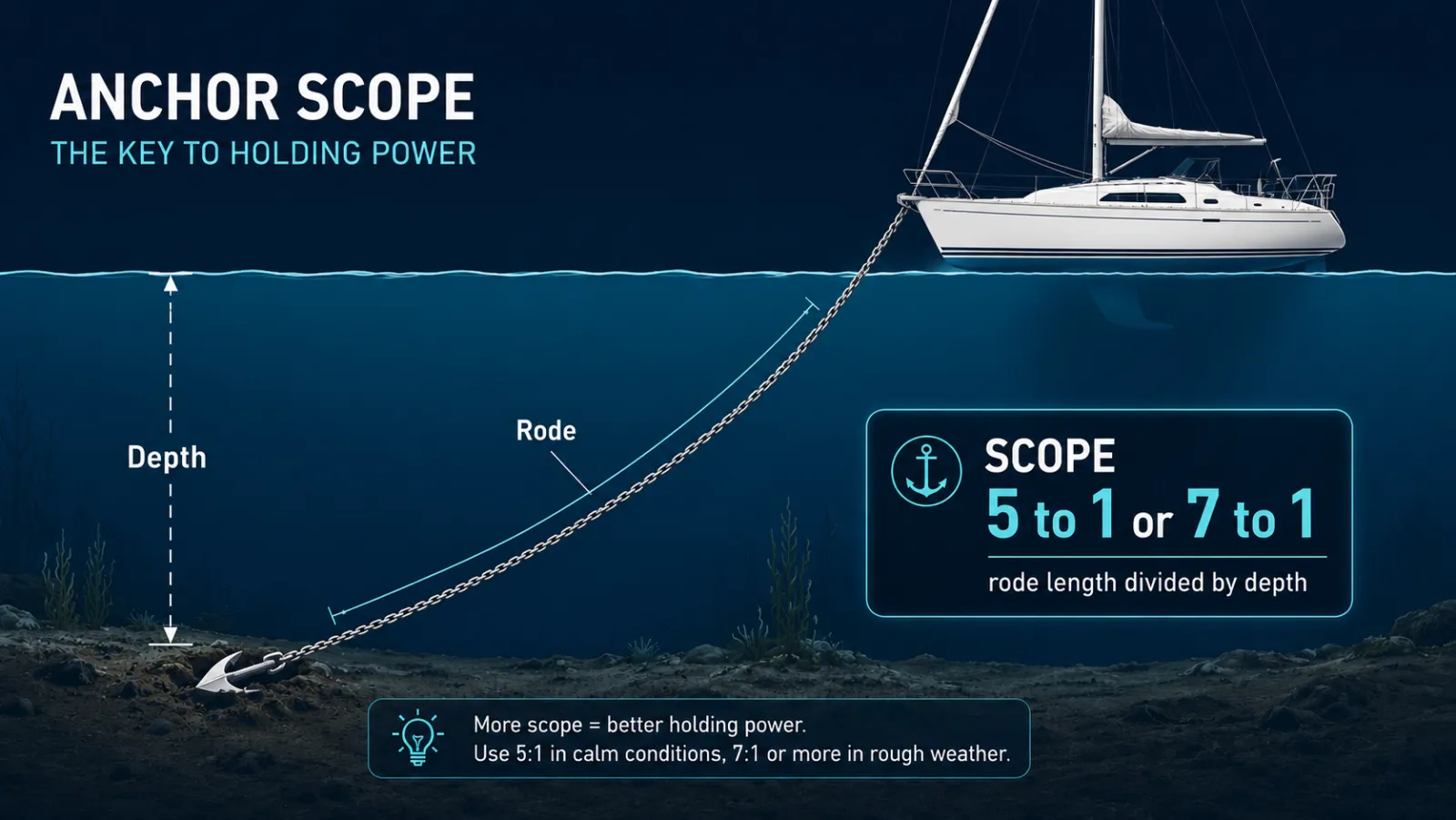
Scope is the ratio of rode you let out to the depth of the water, measured from your bow roller and including the height of tide. More scope means a flatter pull on the anchor, which is exactly what makes it dig in and stay down.
- All-chain rode: 4:1 in calm conditions, 5:1 as a comfortable default.
- Rope and chain, or windier nights: 7:1 or more.
When in doubt, let out more. Short scope is the single most common reason anchors drag.
5. Power set every time
Once the rode is out, put the engine gently astern and let the load build until the anchor bites and the boat stops moving over the ground. Watch a fixed point on shore, or use your GPS, to confirm you are truly stopped and not slowly sliding. A proper set now is worth an hour of worry later.
6. Add a snubber or bridle
A snubber is a short length of stretchy nylon line from your chain to a bow cleat, with the load taken off the windlass. It absorbs the shock of gusts and waves instead of that jolt going straight into the anchor and the boat. It also silences the chain grumble so you can actually sleep. On a catamaran, a bridle does the same job across both bows.
7. Take bearings and mark your spot
Once you are set, note where you are. Old-school sailors take bearings on two fixed landmarks; modern crews drop a pin in an app. Either way, you now have a reference to tell whether you are holding or slowly creeping. This is the difference between noticing a drag early and waking up somewhere new.
8. Know your swing from a drag
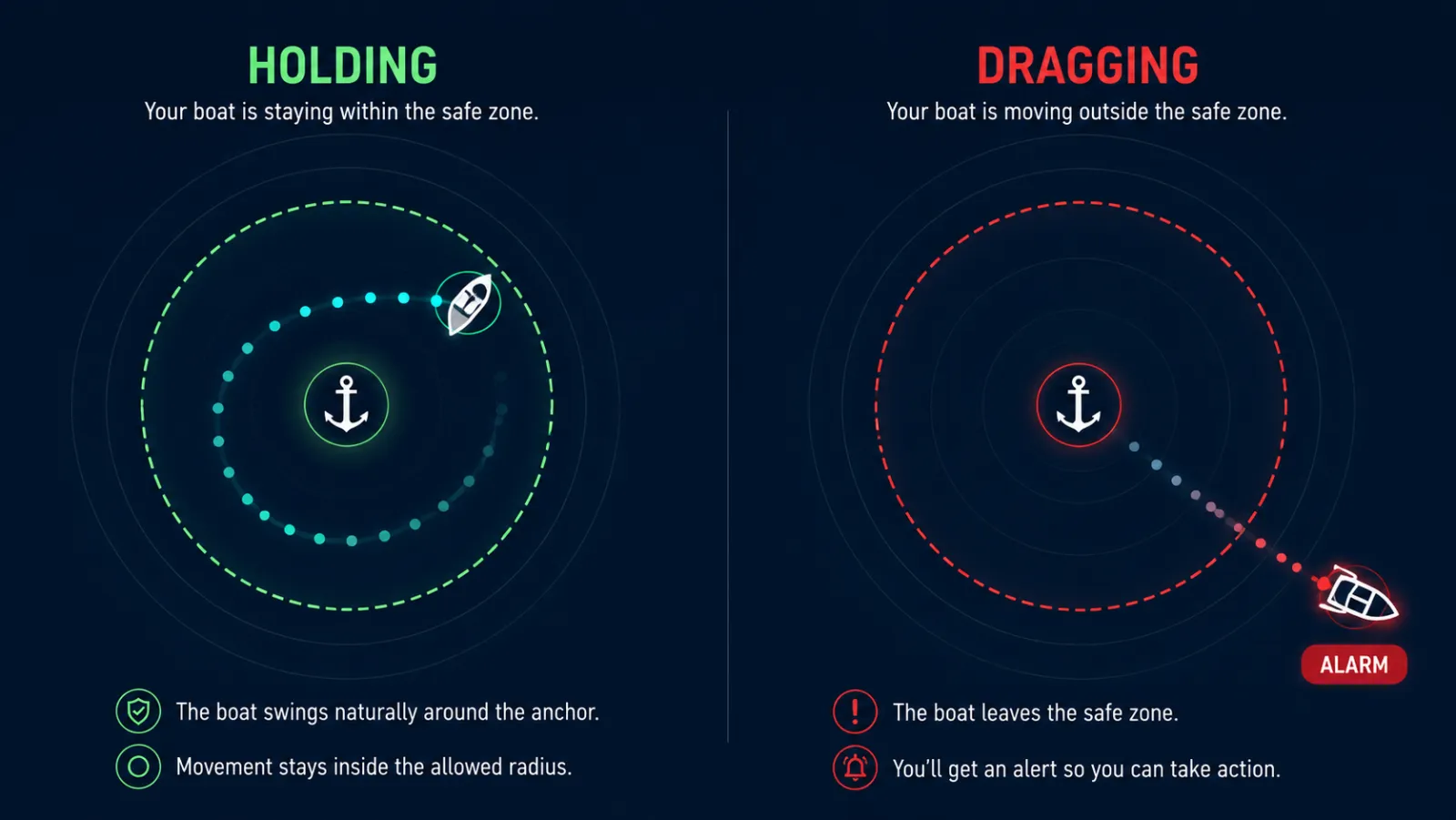
Here is where a lot of anchor watches go wrong: they alarm every time the boat swings normally on a wind shift, and after two false alarms you switch them off. The trick is a watch that records your track so you can see the shape of the swing. A boat holding well traces a clean arc around the anchor; a boat dragging leaves that arc and tracks off in one direction. The right anchor alarm app shows you this at a glance.
How we stay calm at anchor
We keep one phone on the boat running Anchor Alarm Pro. It draws the safe circle from our anchor position and rode, records the swing track, and sounds a loud alarm the moment the boat leaves that circle, even with the screen off. From a bunk or ashore, a second phone or a laptop can watch the same anchorage over a shared code. That is genuinely why we sleep through the nights we used to lie awake.
9. Check it, then check it again
Give the anchor twenty minutes and look again before you relax. In warm, clear water, a quick snorkel over the anchor tells you everything: is it dug in, or lying on its side in the weed? If the wind is due to build or shift overnight, factor that into your scope and your choice of spot now, not at 3am.
10. Keep a real anchor watch overnight
You cannot stare at the shore all night, so let your phone do it. Set an anchor watch before you turn in, with the alarm loud enough to wake you and notifications on in case you are away from the boat. This is the layer that catches the rare bad night, the wind shift onto a lee shore, the patch of weed that finally lets go. It is also the one that lets you stop lying awake listening to the chain.

The short version
Choose the spot for the full swing, lower and lay out the chain, give it generous scope, power set it hard, add a snubber, mark your position, and keep a watch that can tell a swing from a drag. None of it is complicated. Do it the same way every time and anchoring stops being the stressful part of the day.
These are general seamanship tips, not a substitute for local knowledge, your own judgement and a proper watch. Every boat and anchorage is different.