
How it is done
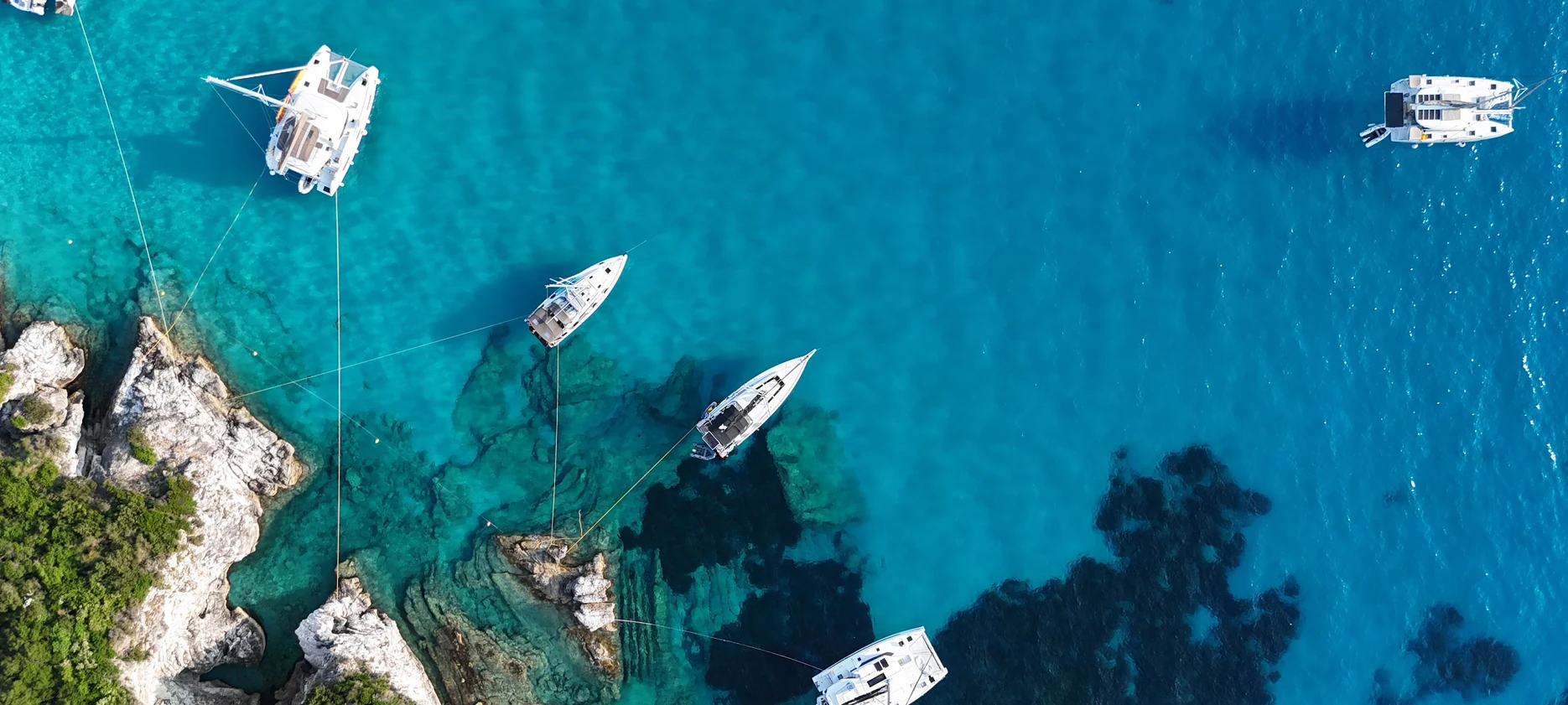
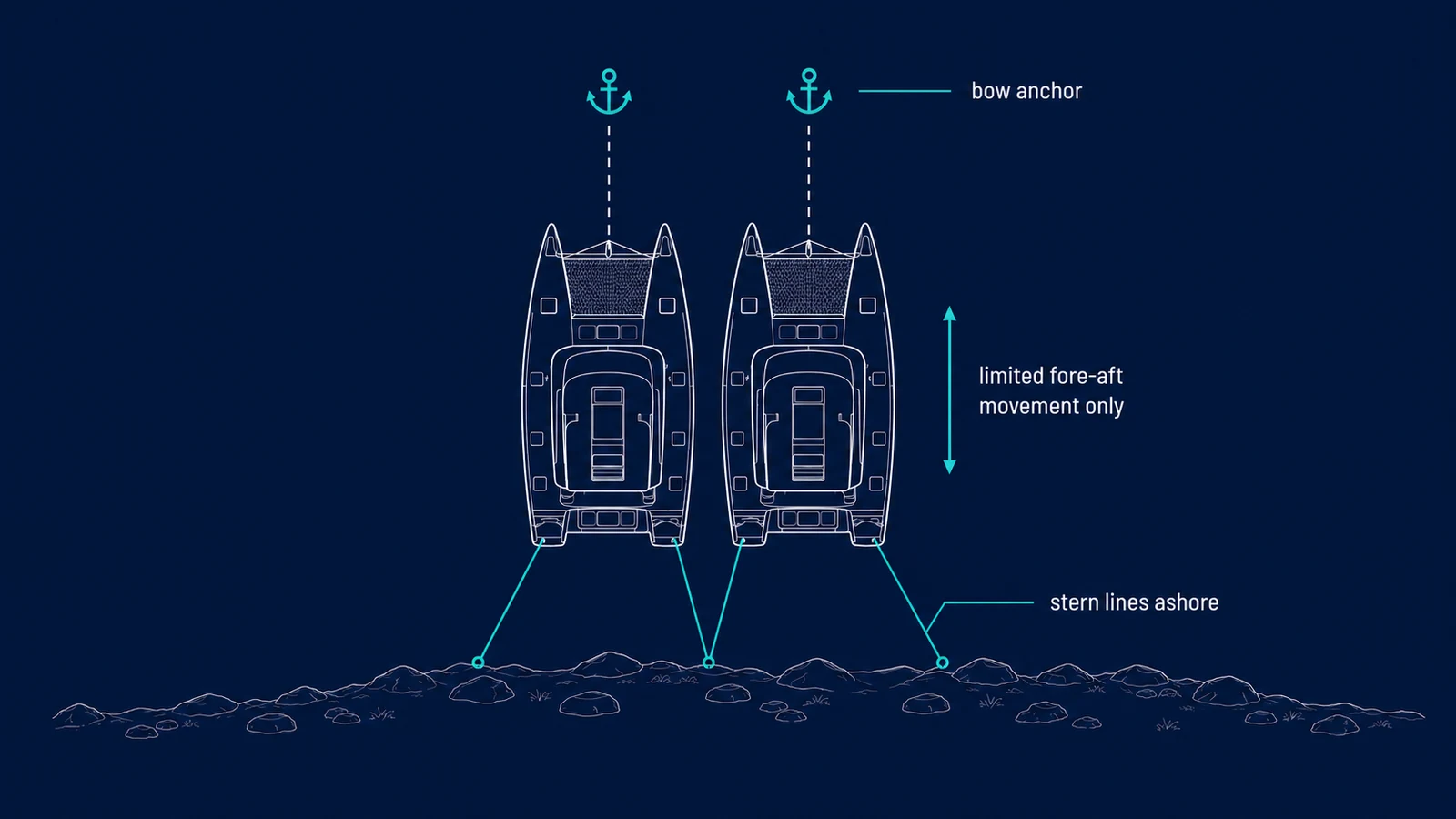
You motor in bow first, drop the anchor well out, and back down towards the rocks paying out chain. Someone takes a long line ashore in the dinghy, or swims it, and makes it fast around a rock or a ring. Then the same on the other quarter. Tension both, take up on the windlass, and the boat sits held between the anchor ahead and two lines aft.
Done properly it is superb. You use a fraction of the room a swinging boat needs, which is the only reason six boats fit in a cove that would otherwise hold two. The boat lies still. Nobody drags down on anybody.
Chafe, which you will not see coming
A line lying over limestone saws itself apart. Not quickly, and not where you are looking. Rock is abrasive, the boat works gently all night on the swell, and the line moves a few centimetres back and forth over the same edge for eight hours.
This is the most common failure by a wide margin, and it is almost entirely preventable. Walk both lines before you go to bed and look at every point where one crosses rock. Put something over it: a length of hose, a rag, an old fender cover. If a line runs over a sharp edge you cannot pad, move it.
You cannot weathervane any more
A boat on a single anchor points into the wind by itself. That is not a convenience, it is what keeps the loads low. The boat presents its narrowest face to the weather and rides quietly.
Tied fore and aft, that is gone. When the wind shifts, the boat cannot turn, so it takes the new wind on the beam. The loads on both the anchor and the lines rise sharply, the boat rolls, and everything gets noisier. A gentle night can become a bad one without the wind ever getting strong, simply because it changed direction.
So the forecast question is not only how hard it will blow, but whether it will veer. If a shift is coming that will put the wind across you, lines ashore is the wrong choice for that night.
The one that goes bang
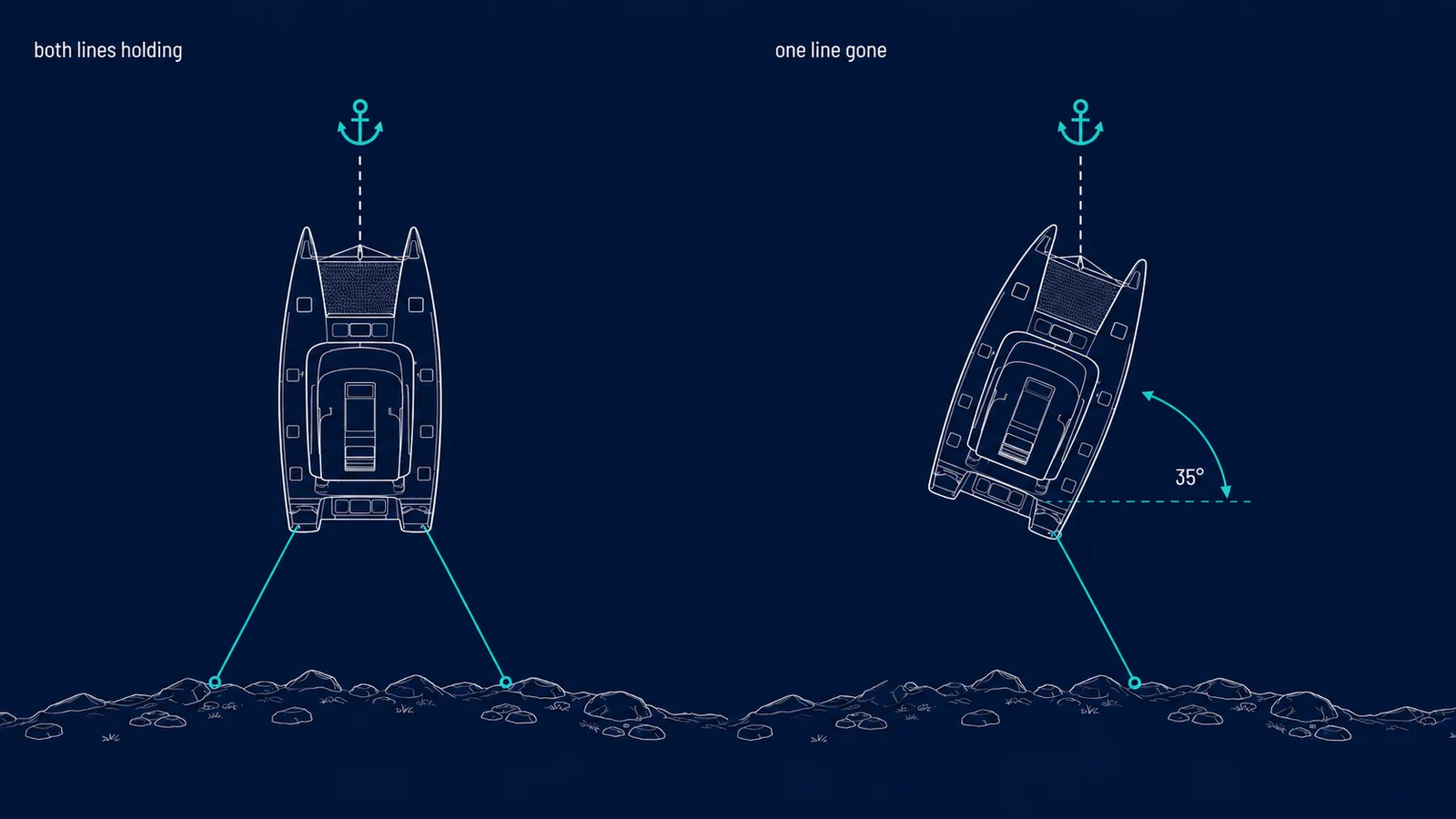
If one stern line parts, the boat is suddenly held by an anchor and a single line on one quarter. It swings hard towards the remaining line, pivoting on it, and in a crowded cove there is not much room for that.
The tell is rotation, not distance
When a line goes, the boat barely travels at first. What it does immediately is turn. By the time the position has changed enough for a distance-based alarm to notice, the swing has already happened and whatever it was going to hit, it has hit.
Why the usual anchor alarm struggles
Nearly every anchor alarm works the same way: mark a point, set a radius, sound the alarm if the boat leaves the circle. For a boat swinging freely that is exactly right, because the boat genuinely can end up anywhere on that circle.
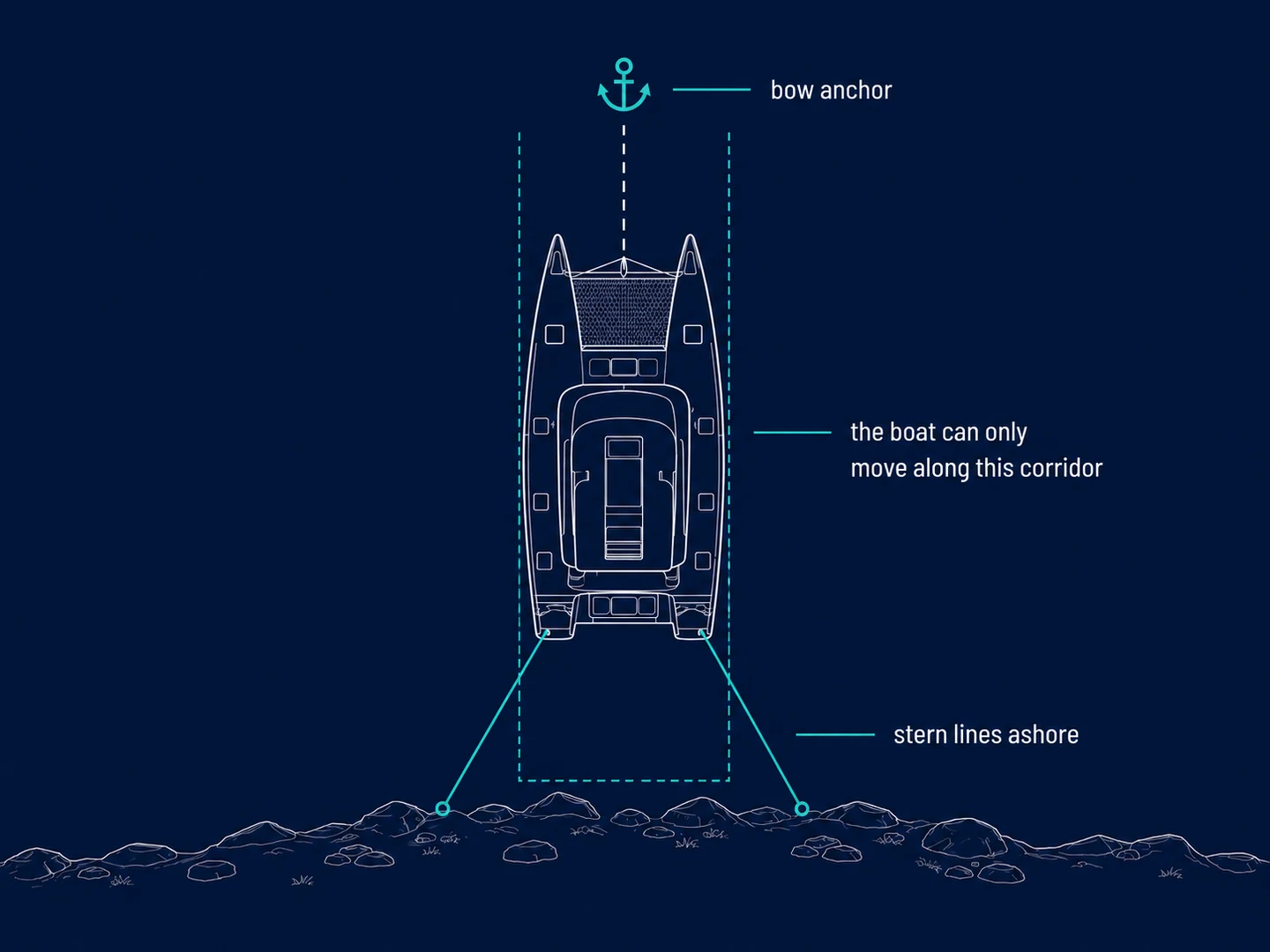
Tied fore and aft, it cannot. It moves a few metres along one axis and no further. So the circle is either far too big or far too small, and both are bad:
- Size it as you would for a free swing and it is wide enough for the boat to reach the rocks without a sound.
- Size it tightly around the boat and it goes off every time a gust surges you a couple of metres.
The second is worse than it looks, because nobody tolerates an alarm that cries wolf. It gets widened, or switched off, on precisely the nights it is most needed.
How Anchor Alarm Pro watches lines ashore
This is why the app has more than one securing type. Choose stern lines ashore instead of a free swing and the watch changes shape: it follows the corridor the boat can actually move in, rather than drawing a circle around the anchor, so the limits sit where the rocks are and not tens of metres beyond them.
On top of that it watches the heading. A change of about 35 degrees raises the alarm on its own, whatever the distance is doing, which is the case a circle cannot catch in time. The confirmed alarm is taken from the median of the fixes in a rolling 20 second window rather than a single reading, so one wild GPS fix does not wake the whole cove.
- Five securing types, not one: free swing, mooring buoy, a restricted area you draw yourself, stern lines ashore, and a Bahamian moor.
- It works with no signal. The watch and the alarm run entirely on the phone, which matters in the coves where this is done.
- Free, no account, no subscription, on iPhone, Android and in a browser.
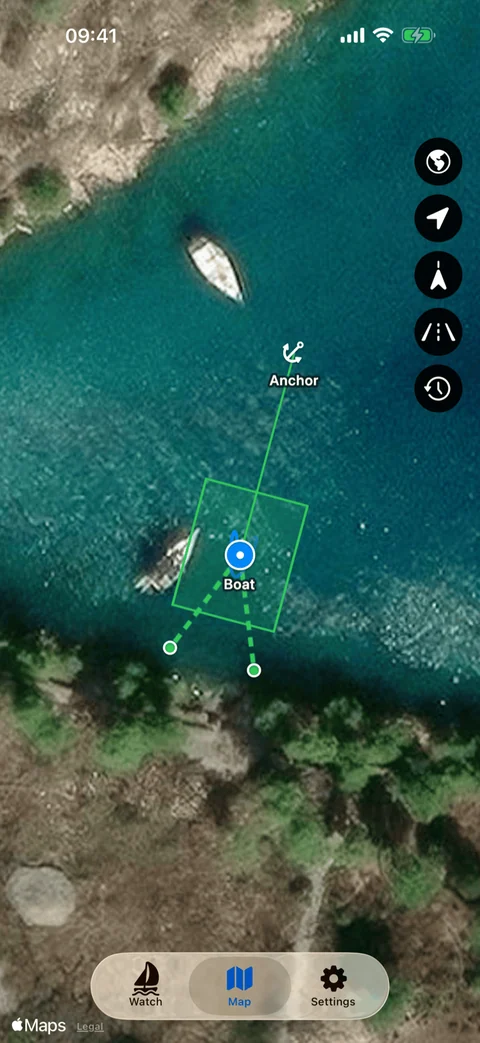
Set the shape of the watch, not just a radius
Pick the securing type when you set the anchor, and the alarm matches how the boat is actually held. For lines ashore that means a corridor plus a rotation limit, so a parted line raises the alarm while the boat is still turning rather than after it has travelled.
What to do, whatever you use to watch the boat
- Pad every chafe point before dark, and check the lines again if the wind gets up.
- Check the forecast for a shift, not just a strength. A veer that puts the wind on the beam is the thing that ruins the night.
- Keep the anchor working. Lines ashore do not replace a well set anchor, they just stop you swinging on it.
- Watch the heading as well as the position. If your alarm can only do a circle, set it generously and rely on your own eyes for rotation, because the circle will not catch a parted line in time.
- Have a plan for leaving in the dark, because retrieving two shore lines at two in the morning in a rising wind is genuinely difficult, and it is much easier if you decided the order of operations while it was still light.
These are general seamanship notes, not a substitute for your own judgement of the anchorage, the forecast and the boat.